Quantum Leap
(For optimum viewing, adjust the zoom level of your browser to 125%.)
Season One (1989)
Rate:
5 out of 5
Viewed:
3/26
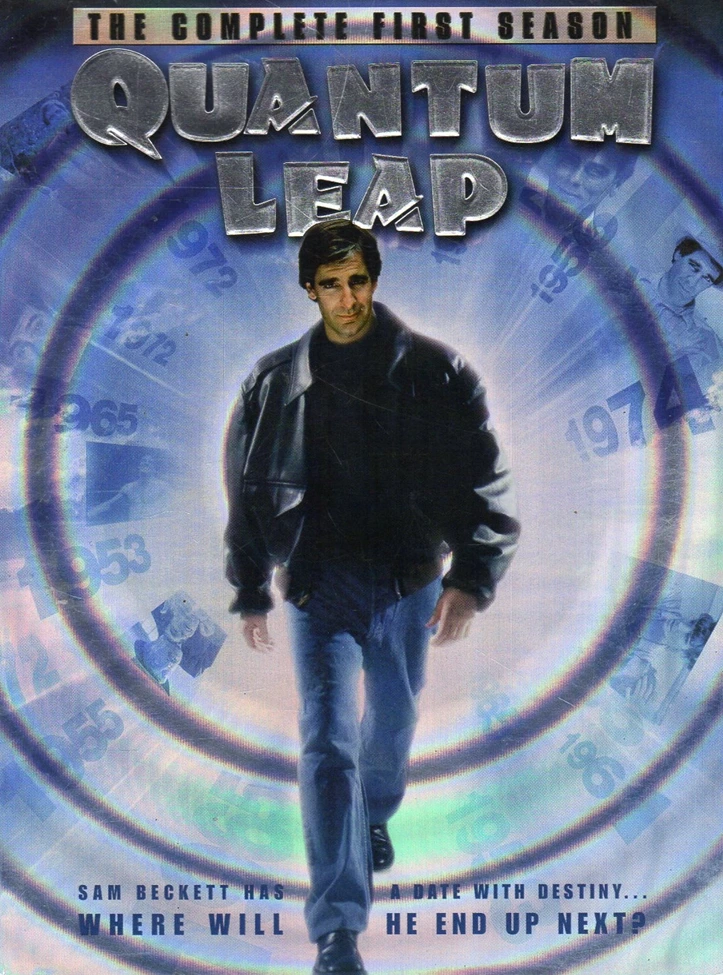
3/26:
I used to watch Quantum Leap every single week for five seasons and loved everything about it.
What a surprise when it was canceled afterwards due to declining viewership. The best parts are the time travel
and Sam Beckett trying to figure out why he's transported to this person's life at a specific time, seeing a
different face in the mirror, saying, "Oh, boy," righting a wrong and/or undoing a death, receiving several
clues from time to time about his previous life, working with Al who's a sex addict and can't stop talking about
women, and entering the moment of a leap.
At the same time, there's a lot of history going on plus the anachronisms because they haven't been invented
or aren't yet in fashion. Sam also has to be careful about what he says because some of the words haven't entered
the national lexicon. Ditto for keeping everything as normal as possible. One big flaw is that Sam is always
at the same height every time he enters a person; what if one is actually 10 inches shorter or 5 inches taller?
Regardless, when I think of Quantum Leap, I always think of Scott Bakula and Dean Stockwell, and vice
versa. They made the show possible. It's very creative and intelligent, belonging in the top five sci-fi TV
shows of all time.
Here's my analysis for some of the following episodes:
Genesis: This is the one that began all, providing a lot of background information as to why and what
happened. Believe it or not, it was directed by David Hemmings of
Blow-Up fame. If you're confused, B.O.Q. means "Bachelor Officer Quarters" which
is a sleeping place for unmarried officers. As for the consecutive signs on the roadside, it was made popular by
Burma-Shave. I've seen just one in my entire life that's still there in Southern New Jersey which goes like this:
"Today's Kids...Sure Missed a Treat...No Moonlight Rides...In a Rumble Seat." Also, there's a bonus of two
quantum leaps. While guest-starring Bruce McGill, the first one reminds me a lot of
The Right Stuff, and it would've been cool if a famous test pilot showed
up and said, "Hello, I'm Chuck Yeager." By the way, the present day is 1996 which is when Sam first started to
time travel because of Al's goof by telling him that he would have to wait for 40 years to get back to where he
was initially in. Of course, the board game Trivial Pursuit didn't come out until 1981; however, the word "nerd"
wasn't new at the time. Good one, Al...Roy Hobbs from The Natural.
Star-Crossed: I find it funny that Sam, who breaks his own rule for not taking advantage of his position
to improve or alter his life, won't do a thing about the Watergate break-in which occurred on June 17, 1972.
In the meantime, Teri Hatcher guest-stars and does a good job. By the way, Lawrence College doesn't exist, but
there's Sarah Lawrence College in Yonkers, New York.
The Right Hand of God: Marilyn Monroe comes alive. Meanwhile, two movies are referenced: Ingrid Bergman
as in The Bell of St. Mary's and when Sam Beckett amusingly took advantage of sitting in the back of a
car to recite one of the most famous lines of Marlon Brando's career in
On the Waterfront. It's clever when Sam thought of a way out by
taking cue from "The Rumble in the Jungle" to make a lot of money based on when the knockout would
occur in which round. That famous fight between Muhammad Ali and George Foreman would be covered in an
outstanding documentary called When We Were Kings. I actually
thought Sam planned to copy Ali's strategy for winning the fight. Streaking was made popular the year before.
How the Tess Was Won: It's Giant time. Honestly, this one took me five
seconds to guess the kid was Buddy Holly although he's supposed to be 20 years old, so I'm surprised that Sam
couldn't figure it out. He should've told him, "Don't get on the plane in Iowa!" Oddly, Buddy Holly composed a
hit called "Oh, Boy!," but it wasn't used during this episode. By the way, Wild Bill Hickok was killed while
holding two pairs of black aces and eights, hence the nickname "dead man's hand."
Double Identity: It's a bonus: two quantum leaps in a single episode, but this time, Sam Beckett goes
from one character to another within the same scene. I remember a long time ago that I was asked a
Trivial Pursuit question about what happened on November 9, 1965, prompting me to go, "Huh?" Well, this one
makes a mention of the Great Northeast Blackout, affecting many parts of Ontario, Connecticut, Massachusetts,
New Hampshire, New Jersey, New York, Rhode Island, Pennsylvania, and Vermont. Approximately 30 million people
were left without electricity for at most 13 hours. The word "awesome" didn't enter the national lexicon until
the 80's, and Sean Penn may have been the originator, thanks to
Fast Times at Ridgemont High. I like the catchphrase that's
uttered by Terri Garber of North and South fame:
"If I'm lyin', I'm dyin'"
The Color of Truth: Let me guess: Driving Miss Daisy in
Red Dog, Alabama? Yet the movie wasn't released until afterwards although the play was already known. Must I be
reminded so many times of what Sam's character looks like? I actually didn't know what "chitlins" meant hitherto.
Uh...hard pass. Red Dog's town square is the same one in all of
Back to the Future films.
Camikazi Kid: I love the tie-in with American Graffiti which
guest-stars Jason Priestley of future Beverly Hills, 90210. To be
fair to Sam, he couldn't have warned Michael Jackson, "Whatever you do, don't molest the kids!" because that
wasn't a well-known fact in 1989. By the way, if it's 1961, Michael Jackson would have been 3 years old and still
living in Gary, Indiana, and the band didn't form until 1964, so I don't think so. But the timing of
Peace Corps is correct, having been founded in March, thanks to JFK's signed executive order.
Play It Again, Seymour: Humphrey Bogart and
The Maltese Falcon. It's the best episode with Claudia Christian
playing the hottest-looking female of the season although I keep getting confused by the supposed setting. It's
in fact New York City, but the Bradbury Bulding (famous for being in so many movies including
D.O.A.) is in Los Angeles on top of the Dodgers which hadn't moved yet until
1957. It's not bad when Seymour strung together a lot of tongue twisters to be the next Raymond Chandler (or
Dashiell Hammett or Mickey Spillane...take your pick). If you are really curious, the man in the mirror isn't
Robert Sacchi (you'll know what I mean by watching
The Man with Bogart's Face). Meanwhile, they changed the
introduction, and it looks a lot better; the old one was too long. When a young kid with glasses at the airport
asked Sam aka Bogart for an autograph, he's supposed to be Woody Allen, but really...who cares?
Season Two (1989-90)
Rate:
5 out of 5
Viewed:
3/26
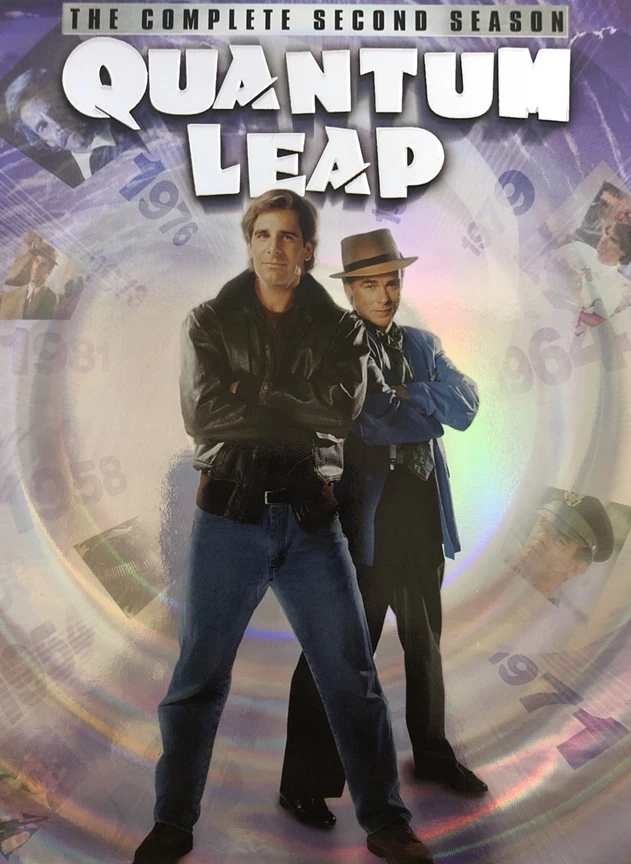
3/26:
My rating may seem high for Season Two because some of the episode have become bland toward the end,
but many stories are still interesting.
In regard to the first episode, I want to make an argument about the importance of Project Quantum Leap.
Obviously, time travel is impossible in spite of being the greatest achievement of all time. Imagine the
possibilities but, even more so, the damage inflicted if a recourse is taken. Therefore, I can't believe
the committee talked about stopping the funding just because big events weren't being altered.
That's just absurd. No matter how small an event is, it's quite significant in a dangerous way.
Hence, Sam Beckett is the perfect person to handle it responsibly because he has a conscience. Then again,
there's Lord Acton's maxim: "Power tends to corrupt and absolute power corrupts absolutely. Great men are
almost always bad men, even when they exercise influence and not authority; still more when you superadd the
tendency of the certainty of corruption by authority."
Here's my analysis for some of the following episodes:
Honeymoon Express: Hey, what happened to the woman that Sam was supposed to play after he leapt to her
in the tub? The answer is: it'll be featured later in an episode called "What Price Gloria?"
Ah...Francis Gary Powers. When his plane was shot down in USSR leading to quick capture, the Russians
interrogated him for months while the United States denied the truth and said his job was to track
the weather. It didn't work because the Russians had captured Powers' camera which contained incriminating
photos, further increasing the tension of the Cold War. Eventually, he confessed and was sentenced to
ten years in prison, having been released in 1962 as part of a prisoner swap. Abandoned by the United States and
branded as a coward by the media, Powers would die in a helicopter accident in 1977 at age 47.
Disco Inferno: That's cool by starting off heavily with
Saturday Night Fever before transitioning to
Hooper. I also love the borrowed footage from
Earthquake (although that's not possible because the movie already came out
in 1974) to make it seem like Sam was doing the stunts in certain scenes.
What Price Gloria?: This episode should've been moved to the beginning of this season. Anyway, it reminds
me a bit of The Apartment. Christine Jorgensen was the first known male
in the United States to have a sex change operation which began in the early 50's.
Good Morning, Peoria: Rachel is played by Patricia Richardson who'll go on to achieve fame as
Tim Allen's wife in Home Improvement. Yep, Chubby Checker (and that's him for real) is famous for the
song: "The Twist" as popularly seen in American Bandstand. But there are two things wrong with the
picture: the twist dance led to the song and it had already been sung by Hank Ballard and the Midnighters
in 1958.
Thou Shalt Not...: That's funny when Sam performed a Heimlich maneuver on Dr. Henry Heimlich. The year
is actually correct for it to be shown to the nation for the first time. Anyway, the all-grown-up Russ Tamblyn
of Peyton Place and West Side Story
appears in this Jewish version of Ordinary People.
Jimmy: Who's the retard? Obviously Michael Madsen's character. I hate Frank's wife. It's okay to
mention microwave ovens at this point, but they weren't ubiquitous or rather affordable for a while yet.
CPR is absolutely nothing new, having been around for centuries, but the modern version dates to 1960 with
widespread use six years later. Obviously, the story Sam told is from Star Wars.
Overall, it's a very strong episode that's true to life, especially the treatment of mentally disabled people.
So Help Me God: It's nice to see Tyra Ferrell who'll prove to be an excellent actress as evidenced in
Boyz n the Hood, Poetic Justice,
and ER. Miranda rights won't be introduced nationwide until 1966, so nice try,
Sam.
Catch a Falling Star: Getting confused, huh Sam? See above for Lord Acton's maxim. Anyway, it's a very
boring episode for a change.
A Portrait for Troian: Where did the water come from that's raining on the painting? How is it possible
that the two bodies didn't turn into skeletons after being buried underwater for over 130 years? It's unclear
whether the brother and sister can hear Al. If so, that's the first time ever. Another question is: can the
machine record Al's voice? The brother is really dead after being pushed off the jetty? And the lake is
immediately deep by at least eight feet?
Animal Frat: It's debatable whether or not Abbie Hoffman was actually famous enough by this time.
Another Mother: This marks the first time that a person can see Sam as he is and also Al. Of course,
Magnum, P.I. has to be mentioned as it was Donald P. Bellisario's brainchild. Now, I wonder if Sam
Beckett will leap into Tom Selleck's body one day and then tell himself, "Wow! I'm smoking hot," after seeing
himself in the mirror. Michael Stoyanov will go on to be part of the main cast in Blossom. The intro
is much, much improved now as it finally gives the gist of what the show is all about.
All-Americans: Be sure to catch the greatest movie of Scott Bakula's career as it combines football and
comedy: Necessary Roughness.
Her Charm: Oh, how I wanted the woman to die. She's so annoying. The way the second gangster carried
the dead guy off while doing nothing about her is beyond ridiculous. In case if you are wondering, every time
there's a leap to a familiar episode from last season, it's because that's slated to be a rerun the following
week during the show's original run.
Good Night, Dear Heart: So much better than Twin Peaks which
is one of the worst shows I've seen in my life. The whole time, I was like, "The heel! The heel! See if
it matches the hole on the head."
Leaping in Without a Net: That's a first: not being able to see the face of a person Sam has
leapt into which is disappointing.
M.I.A.: A fine twist that concerns Al, and of course, he got selfish.
Season Three (1990-91)
Rate:
out of 5
Viewed:
4/26
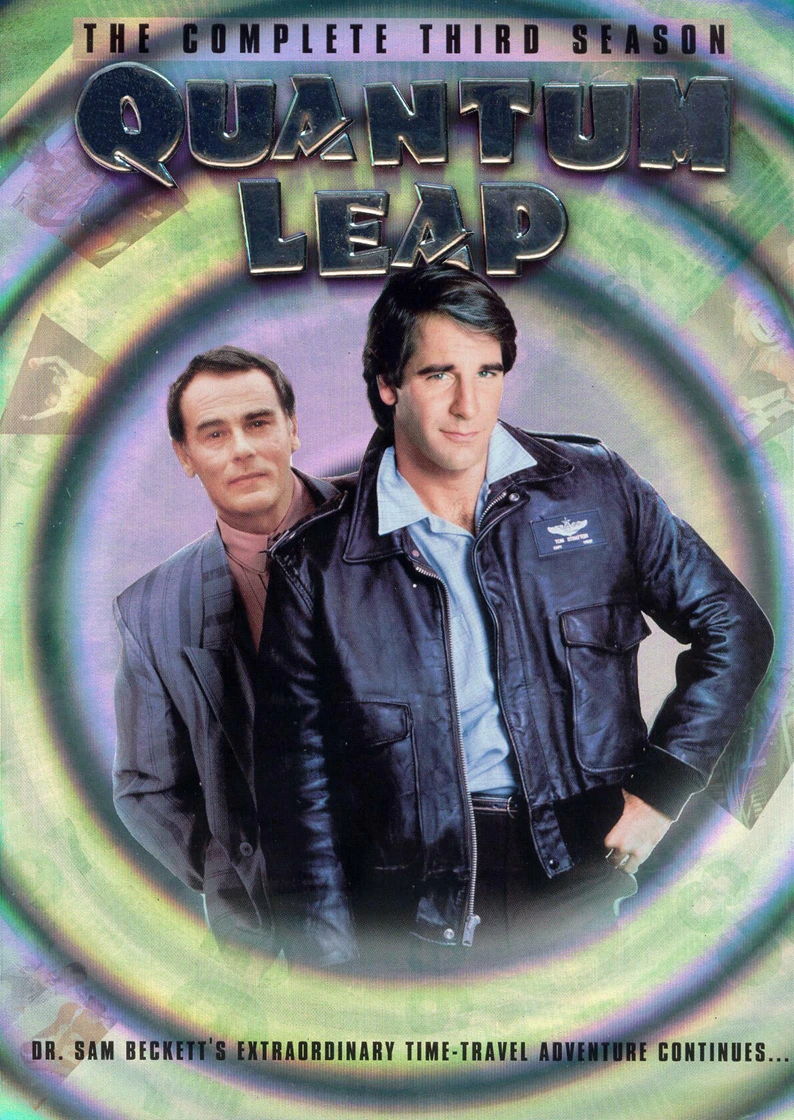
4/26:
Here's my analysis for some of the following episodes:
The Leap Home: This is a much improved intro once again. The first part is among the best episodes of
the series. Sam has to consider Al's feelings because after refusing to help him out the last time, why would
he let himself be a hypocrite?
Leap of Faith: That's funny: Sam Beckett meets young Sylvester Stallone and gives him an idea for
Rocky.