William Holden
(For optimum viewing, adjust the zoom level of your browser to 125%.)
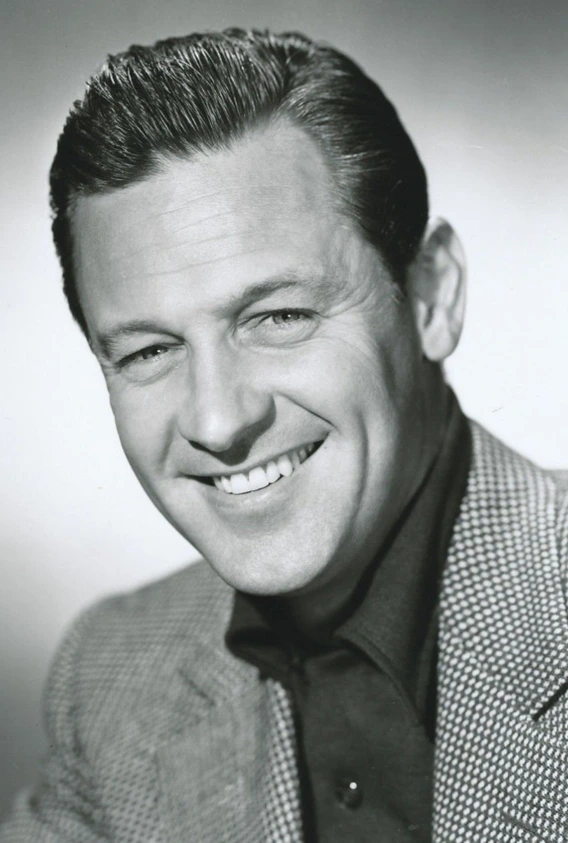 Last Updated: 9/22/26
Real Name: William Franklin Beedle, Jr.
Born: April 17, 1918
Died: November 12, 1981 (Aged 63)
Height: 5' 10"
Grade: A+
Actor/Movie Star: 50%-50%
Prime Years: 1950, 1953-57, 1960, 1962, 1964, 1969, 1973-74, and 1976
Most Famous Film: The Bridge on the River Kwai (1957)
Most Infamous Film: The Proud and Profane (1956)
Masterpiece: Sunset Boulevard (1950), The Bridge on the River Kwai (1957),
and Network (1976)
Outstanding: Stalag 17 (1953), Paris When It Sizzles (1964), and
The Wild Bunch (1969)
Honorable: Born Yesterday (1950), Executive Suite (1954),
The World of Suzie Wong (1960), and Breezy (1973)
Opinion: If there's a perfect all-American actor, William Holden fits the bill. Women loved
working with him and said he was the most handsome they had ever seen. On screen, it's not hard to understand
why, having always looked ageless in every decade. I was very much shocked to learn how he died, especially
at such a young age of 63. But yeah...he looked rapidly aged in the final fifteen to twenty years of his life.
Regardless, William Holden appeared in many classic films that continue to be revered. In what may be one of
the greatest comebacks ever by a bona fide star, his movie career really started with Sunset Boulevard,
not Golden Boy.
Confirmed:
Was born of English, Irish, and German heritage in O'Fallon, Illinois. Father was a chemist while mother was a
schoolteacher. Moved to Monrovia, California, at age 3. Discovered acting by playing Rip Van Winkle in sixth
grade. Relocated to South Pasadena, a wealthy enclave that William Holden was not invited to partake of. A
gymnast, liked to perform dangerous stunts such as walking on a telephone wire and jumping over tall structures.
Was not a good student academically. Liked to sing and play musical instruments. Appeared in plays on radio
while in high school.
Attended Pasadena Junior College in 1936. At age 20, was asked to star in Manya, the only college
play he ever appeared in, which caught the eye of Milt Lewis, a talent scout for Paramount Pictures. Went from
"Bill Beedle" to "William Holden" after a newspaperman with the same name which was officially announced in
Los Angeles Times on February 22, 1939. Made sure to learn everything about the movie business and
took acting classes.
Did a couple of forgettable B films before being granted the leading role in Golden Boy, through a
nationwide search, that was supposed to be for John Garfield who did the play on Broadway but was under
contract to Warner Bros. Showed nerves, causing people in the filmmaking business not to think much of
him, and was about to be fired but got saved by Barbara Stanwyck through persuasion that he could do it.
Had been coached by her in acting all the way from start to finish. Afterwards, would send two
dozen roses to Barbara Stanwyck on April 1 annually until his death in 1981.
Golden Boy didn't prove to be successful nor was William Holden. Had a run of films with little to
no notice until appearing in Sunset Boulevard, after Montgomery Clift turned down the leading role, that
dramatically catapulted his career. In the meantime, married actress Brenda Marshall (he always called her
Ardis [Ankerson] because that's her real name) in 1941 before divorcing three decades later. Enlisted in the
United States Army the following year and became an officer in 1943. Did public relations stuff such radio,
training films, and war bond rallies and hated it, preferring combat duty. Lost his brother, a Navy pilot, who
was shot down in the South Pacific on New Year's Day 1944. Was honorably discharged in nine months later without
having fought in WWII. During this period, began to drink. One night, witnessed a big fight between Arthur
Kennedy and Burl Ives that caused his wife to faint and, in turn, punched the latter in the face.
Thanks to Sunset Boulevard, was made eternally famous by the opening scene of his dead body floating in
the swimming pool and saying, "You're Norma Desmond. You used to be in silent pictures. You used to be big."
Hence, got rewarded with the first Oscar nomination of his career. That was the beginning of the end of
his marriage by having finally overshadowed Ardis in popularity. Served as best man for Ronald Reagan's
marriage to Nancy Davis.
Won the Oscar for Best Actor in Stalag 17 which would inspire a TV show called Hogan's Heroes.
However, said that he didn't deserve it and that the award should've gone to Burt Lancaster for
From Here to Eternity while Ardis felt it was a makeup for Sunset Boulevard. Fell in love with
Audrey Hepburn during the making of Sabrina but went their separate ways afterwards. At the same time,
didn't get along with Humphrey Bogart, having had problems during the making of Invisible Stripes.
Saw his life change in a different direction after doing a stint during the Korean War as part of the
morale-building tour by becoming fascinated with Asia.
Hated doing Love Is a Many-Splendored Thing because of Jennifer Jones which would be made up with
The World of Suzie Wong. After finishing number one of moneymakers in 1956, scored the biggest hit of
his career by appearing in The Bridge on the River Kwai that was shot on location in Ceylon (present-day
Sri Lanka). Moved to Switzerland to escape tax laws which made him unpopular in the United States. Became
fascinated with Kenya in 1959, eventually founding the Mount Kenya Safari Club. Hunted big game for four
years before giving it up to establish a wildlife preserve to protect flora and fauna. Sold the club in 1965
but kept the preserve.
Saw his career decline due to heavy drinking, beginning with Satan Never Sleeps and hitting the peak
during the filming of Paris When It Sizzles when he was too drunk to work. Began to look haggard with
deep lines on his face. On July 26, 1966, in Florence, Italy, drove over 100 MPH, hitting a car and
killing a male driver, and was later found guilty of manslaughter (suspended sentence of eight months). Made a
big comeback by appearing in The Wild Bunch. Pushed Faye Dunaway to the wall for being habitually
late to the set during The Towering Inferno (they would make up prior to filming Network).
Felt he did his best work in Network and was serious about winning another Oscar, the third and final
nomination of his career, but lost out to Peter Finch, remarking, "If the son of a bitch hadn't died, I coulda
had my second Oscar." Was discovered dead on November 16, 1981, leading to the conclusion that he had been
drinking alone and fell down, hitting his head on the table, and bled to death some days before.
Had no acting method or technique, preferring the "less is more" approach. Thought the profession was for
sissies, causing him to drink heavily for decades to get over the shame and stage fright. Tended to be very shy
and embarrassed of himself. Was frequently named among the most professional actors anyone had worked with.
Admired Fredric March and Spencer Tracy the most and had two favorites: Joel McCrea and Gary Cooper. Called
Young and Willing the worst film he had ever done. Had been nicknamed "Bill" by many while it's "Billy"
(he would hate being called that) by her parents. Was a serious collector of art. Loved Asian art and living
in Asia, most especially Hong Kong, and Africa. Played badminton and was a fan of automobile and motorcycle
races. Loved the sun, hence his deep tan. Was a heavy smoker, wore very little makeup in movies, and took
showers four times a day.
Cheated on his wife regularly and wasn't much of a father. Had the habit of hanging from the ledge of windows
to shock everybody. Did his own stunts in films. Carried a death wish constantly and was
absolutely fearless in everything, no matter how great the danger was. Offered his advice to any actor: "Take
any picture you can. One out of five will be good, one out of ten will be very good, and one out of fifteen
might get you an Academy Award."
Rumors: Because of his extensive world travels, especially in Asia and Africa, secretly worked for
the CIA.